As a commercial or industrial business owner in Australia, ensuring electrical safety isn’t just a legal checkbox — it’s a critical duty that protects your team, your clients, your property, and your reputation. Under the Work Health and Safety (WHS) laws, every Person Conducting a Business or Undertaking (PCBU) must manage electrical risks “so far as is reasonably practicable.”
Failing to meet these obligations can lead to serious injuries, costly fines, insurance complications, or even business shutdowns. The three key areas every commercial and industrial workplace must address are:
- Test and tag (portable appliance testing)
- Safety switch (RCD) testing
- Emergency lighting testing
This guide breaks down exactly what Australian Standards require in 2026, why it matters for your sector, and how to stay compliant — all based on the latest national standards.
Why Electrical Safety Compliance Matters for Commercial & Industrial Businesses
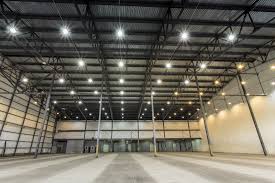
Commercial offices, kitchens, retail, warehouses, factories, manufacturing plants, and industrial sites use far more electrical equipment than a typical home or small retail space. Heavy machinery, cooking equipment, extension leads, power tools, lighting systems, and 24/7 operations create higher “hostile environment” risks under Australian Standards.
Regular testing and tagging, RCD checks, and emergency lighting maintenance help you:
- Prevent electric shocks and electrical fires
- Prevents staff injury, investigations and costly downtime
- Meet your primary duty of care under WHS legislation
- Avoid penalties (which can reach hundreds of thousands of dollars)
- Maintain insurance validity and demonstrate due diligence during audits
Your Trusted Platform For Smarter Financial Decisions read more
1. Test and Tag Requirements (AS/NZS 3760:2022)
Test and tag — also called portable appliance testing — is the in-service safety inspection and testing of all plug-in electrical equipment.
The current standard is AS/NZS 3760:2022 (In-service safety inspection and testing of electrical equipment and RCDs). It requires a competent person to perform:
- Visual inspection for damage, wear, or modifications
- Electrical testing (earth continuity, insulation resistance, polarity, etc.)
- Tagging with the test date and next due date
- Detailed record keeping
Testing frequencies for commercial & industrial workplaces (AS/NZS 3760:2022 Table 2.4):
| Environment | Maximum Interval (most equipment) |
| Construction & demolition | 3 months |
| Factories, warehouses, manufacturing | 6 months |
| Commercial kitchens / cleaning | 6 months |
| Offices / low-risk areas | 2–5 years (risk assessment applies) |
Pro tip for industrial sites: If equipment is moved frequently, used outdoors, or in dusty/damp conditions, you must test more often than the maximum interval.
Only a competent person (trained and experienced) can carry out testing. Many businesses engage licensed electrical service providers to ensure accuracy and proper documentation.
2. Safety Switch (RCD) Testing Requirements
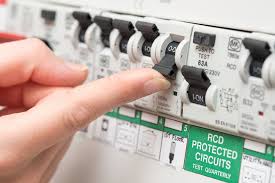
Residual Current Devices (RCDs) — commonly called safety switches — are your first line of defence against electric shock. They monitor the electrical circuit and react by disconnecting power when a fault is detected. They must be installed and properly maintained in almost every workplace.
AS/NZS 3760:2022 covers RCD testing and distinguishes between two checks:
- Push-button test (quick monthly or 6-monthly check anyone can do)
- Trip-time test (professional test measuring how fast the RCD cuts power)
Typical frequencies for commercial & industrial sites:
| Workplace Type | Push-Button Test | Full Trip-Time Test |
| Construction sites | Every 3 months | Every 6 months |
| Manufacturing / industrial | Every 6 months | Every 12 months |
| Commercial offices / warehouses | Every 6 months | Every 12–24 months |
Fixed RCDs in switchboards and portable RCDs on leads both need regular testing. Records must show who performed the test and the results.
3. Emergency Lighting & Exit Sign Testing (AS/NZS 2293)
In a power failure or fire, your emergency lighting and exit signs must work immediately to guide people safely out of the building.
AS/NZS 2293 (Parts 1 & 2) is the governing standard for commercial and industrial buildings.
Mandatory requirements:
- Full inspection and 90-minute battery discharge test every 6 months
- Visual checks for damage, dirt, or obstructions
- Record all results in a logbook (kept on site for audits)
Most commercial buildings (Class 5–9 under the National Construction Code) require compliant emergency lighting. Industrial sites with large open areas or high-risk zones have even stricter needs.
Failing the 6-monthly test can mean your building is non-compliant and unsafe for occupancy.
Record Keeping & Best Practices for Compliance
All three areas require clear, up-to-date records. Auditors and WorkSafe inspectors expect to see:
- Test and tag registers with equipment details and due dates
- RCD test results (push-button and trip-time)
- Emergency lighting logbooks with 6-monthly discharge test data
Digital systems make this easier and more audit-proof than paper records.
Practical steps for your business:
- Conduct a risk assessment of all electrical equipment and systems
- Schedule testing with a reputable, fully insured provider
- Train staff on daily visual checks and push-button RCD tests
- Review records annually or before any WHS audit
Stay Compliant, Stay Safe — Take Action Today
Electrical safety compliance isn’t complicated when you have the right systems in place. Meeting AS/NZS 3760:2022 and AS/NZS 2293 requirements protects your people and gives you peace of mind that your commercial or industrial operation is legally covered.
If you manage a warehouse, factory, office complex, or any commercial site and want expert help with test and tag, RCD testing, or emergency lighting compliance, reach out to a qualified electrical safety specialist. Many providers offer tailored packages, on-site testing, and ongoing compliance programs designed specifically for busy Australian businesses.
This article is for general guidance only and reflects Australian Standards as of April 2026. Always check with your state regulator (e.g., WorkSafe QLD, SafeWork NSW) or a licensed professional for site-specific advice.